Written by: Ryan Gardner, Owner, Managing Partner, CEO, Bucked Up
Key Takeaways
- L-citrulline bypasses first-pass metabolism and raises plasma arginine levels more reliably than oral L-arginine alone.1
- Stacking L-citrulline and L-arginine is generally safe, but a solid L-citrulline dose usually covers nitric oxide support.1
- Effective dosing starts at 3 g of pure L-citrulline daily, with 6 g/day for seven or more days showing strong performance support in research.1
- Take L-citrulline 30–60 minutes before training; multi-day use builds more stable plasma arginine levels than a single pre-workout serving.
- Bucked Up applies these findings with transparently dosed citrulline and absorption support, so you can shop Bucked Up L-Citrulline with clarity about what you are taking.1
Why Athletes Think About Stacking L-Citrulline and L-Arginine
Athletes often stack these amino acids because both feed into nitric oxide production. Nitric oxide is a gaseous signaling molecule that supports the relaxation of vascular smooth muscle, which supports blood flow to working muscles.1 More blood flow means more oxygen, more glucose, and better nutrient delivery during training. L-arginine is the direct substrate that nitric oxide synthase (NOS) enzymes use to produce nitric oxide. L-citrulline is a precursor that the body converts into L-arginine. Many athletes assume that combining both will flood the system with substrate from two directions at once.
The actual story is more nuanced and depends on what happens between your mouth and your bloodstream.
How L-Citrulline and L-Arginine Behave in Your Body
L-arginine serves as the direct raw material for nitric oxide production. Nitric oxide synthase enzymes convert L-arginine into nitric oxide and, as a byproduct, L-citrulline. That L-citrulline then re-enters the urea cycle, where it can be recycled back into L-arginine. The cycle looks elegant in theory.
L-citrulline also acts as a key intermediate in the urea cycle, the metabolic process that converts ammonia, a byproduct of protein metabolism and intense exercise, into urea for excretion. By supporting ammonia clearance, L-citrulline may help reduce exercise-induced ammonia accumulation in skeletal muscle, which is associated with central fatigue.1 This mechanism underpins much of the endurance and recovery research, not just the pump effects.
When L-citrulline is bonded with malic acid to form citrulline malate, the malate component may add another benefit. Malic acid is an intermediate in the Krebs cycle, the aerobic energy production pathway. This connection may support oxidative ATP production and phosphocreatine recovery during sustained training.1
These mechanisms set up a practical question for lifters and endurance athletes: does combining both amino acids improve results, or does one ingredient already cover most needs?
Is Taking L-Citrulline and L-Arginine Together Necessary?
Oral L-arginine faces a significant obstacle called first-pass metabolism. Arginase enzymes in the gut and liver degrade a substantial portion of ingested L-arginine before it reaches systemic circulation, a limitation sometimes called the arginine paradox. As a result, oral L-arginine raises plasma arginine levels less reliably than the dose on the label might suggest.
L-citrulline follows a different route. It is well-absorbed from the small intestine, largely evades first-pass arginase metabolism, and travels to the kidneys. There it converts into L-arginine through the enzymes argininosuccinate synthase and argininosuccinate lyase. Studies show that L-citrulline supplementation raises plasma L-arginine levels in a meaningful and sustained way, without the gut-and-liver degradation that limits oral arginine.
When both amino acids are combined, L-arginine provides a rise in plasma arginine while L-citrulline converts to L-arginine over time. Meta-analyses suggest the dual approach can support nitric oxide biomarkers and flow-mediated dilation more than either amino acid alone in certain populations.1 For most healthy, active adults using a well-dosed L-citrulline supplement, the combination often adds complexity without a clear extra benefit. L-citrulline alone, at the right dose, already delivers sustained plasma arginine elevation that supports nitric oxide production.1
The short version: L-citrulline is usually the more reliable single ingredient. The combination is not harmful, but it is rarely necessary when L-citrulline is properly dosed.
Ready to stop guessing and start training with transparently dosed ingredients? Find pre-workouts with the 6 g citrulline dose backed by research.
Practical Dosage Ranges for L-Citrulline and L-Arginine
Effective use depends on dose and form. Research supports the following ranges.
Pure L-Citrulline:
- 3 g per day supports a meaningful rise in plasma L-arginine within one to two hours.
- 6 g per day for 7 or more days uses the multi-day protocol mentioned earlier, which showed strong performance support in controlled trials.
- Multi-day supplementation at 6 g/day currently has the most consistent backing in human trial data for exercise performance.
Citrulline Malate (2:1 ratio):
- 6 to 8 g of citrulline malate provides approximately 3.4 to 4.5 g of actual L-citrulline, because the malate form is roughly 56.6% citrulline by weight.
- 8 g of citrulline malate has been studied for resistance exercise performance, with some trials reporting support for total repetitions completed across multiple sets to muscular failure.1
- Note: single pre-exercise doses of 8 g citrulline malate or 5.3 g pure L-citrulline have not shown consistent performance benefits versus placebo in multiple controlled trials (Farney et al., Chappell et al., Martin-Olmedo et al.). This pattern is why multi-day loading protocols are generally preferred.
L-Arginine:
- Doses studied for performance support typically range from 1.5 g to 6 g, though first-pass metabolism limits systemic availability at all oral doses.
- Very high doses, around 21 to 30 g/day, are associated with gastrointestinal side effects and are not used in performance contexts.
Timing L-Citrulline and L-Arginine Around Training
Timing can shape how well these ingredients support your sessions.
- Pre-workout window: L-citrulline is typically taken about 60 minutes before intense physical activity so plasma arginine levels can rise before training.1
- Peak plasma concentration: Peak plasma L-citrulline concentrations usually occur within 0.7 to 2 hours after ingestion.
- Daily use for sustained support: Multi-day supplementation at 6 g/day of pure L-citrulline appears to produce more consistent performance outcomes than a single acute dose. Daily use builds a steadier elevation in plasma arginine.1
- Citrulline malate timing: 6 to 8 g taken 30 to 60 minutes before exercise matches the window used in resistance exercise trials.
- If combining with L-arginine: Take both in the same pre-workout window. Arginine provides an immediate, modest rise, while citrulline sustains the elevation over several hours.
Side Effects and Tolerability for L-Citrulline and L-Arginine
L-citrulline is generally well-tolerated at doses used for performance support. Mild gastrointestinal discomfort, including nausea, bloating, or cramps, may appear at very high single doses of 10 g or more. Some people report headaches, likely related to vasodilatory effects. These side effects stay infrequent at typical performance doses.
L-arginine tends to have a less favorable tolerability profile at high doses. Oral L-arginine at very high doses of 21 to 30 g/day has been associated with nausea, vomiting, and diarrhea in healthy adults (Evans et al., J Nutr Biochem, 2004). At performance-relevant doses, gastrointestinal side effects are usually mild and infrequent.
People with naturally low blood pressure, kidney conditions, or those taking blood pressure medications, nitrate medications, or phosphodiesterase-5 inhibitors should talk with a healthcare provider before using L-citrulline or L-arginine supplements. Vasodilatory effects may compound with these conditions or medications. Discontinue use at least two weeks before any scheduled surgery and follow your healthcare provider’s guidance.
How Bucked Up Uses L-Citrulline in Its Pre-Workouts
Bucked Up builds its pre-workout line around the pharmacokinetic reality described above. L-citrulline serves as a reliable vehicle for supporting nitric oxide production,* and the dose on the label needs to be meaningful, not a trace amount.1
The foundational pre-workouts, Bucked Up and Woke AF, use 6,000 mg of Citrulline Malate in a 2:1 ratio, which sits at the threshold studied in resistance exercise research. The 2:1 ratio means the citrulline component supports vasodilation,* while the malate component supports the energy side through Krebs cycle involvement.1 Woke AF pairs that same citrulline load with 333 mg of caffeine, addressing the reality that high stimulant intake can cause vasoconstriction when citrulline support is lacking.1
Mother Bucker takes a different approach for advanced athletes. It uses 4,000 mg of pure L-citrulline stacked with Nitrosigine® and Hydroprime® Glycerol. The malic acid is removed to make room for pure citrulline alongside one of the more studied blood flow ingredients in modern sports nutrition formulation. Bucked Up refers to this as the Pump Trifecta.
Across every formula, Bucked Up includes Astragin®, which is studied to support citrulline absorption and bioavailability.*1 Every gram of citrulline on the label appears clearly disclosed, with no proprietary blends hiding the actual dose.
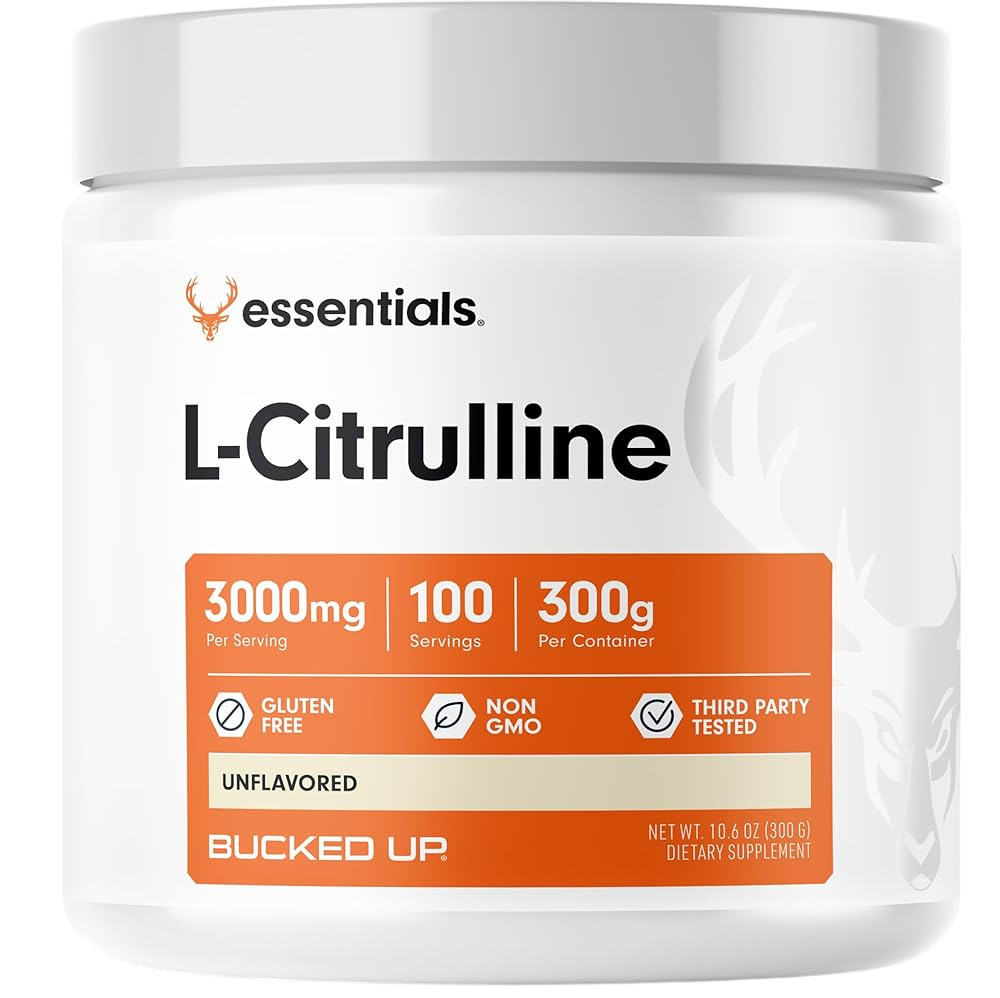
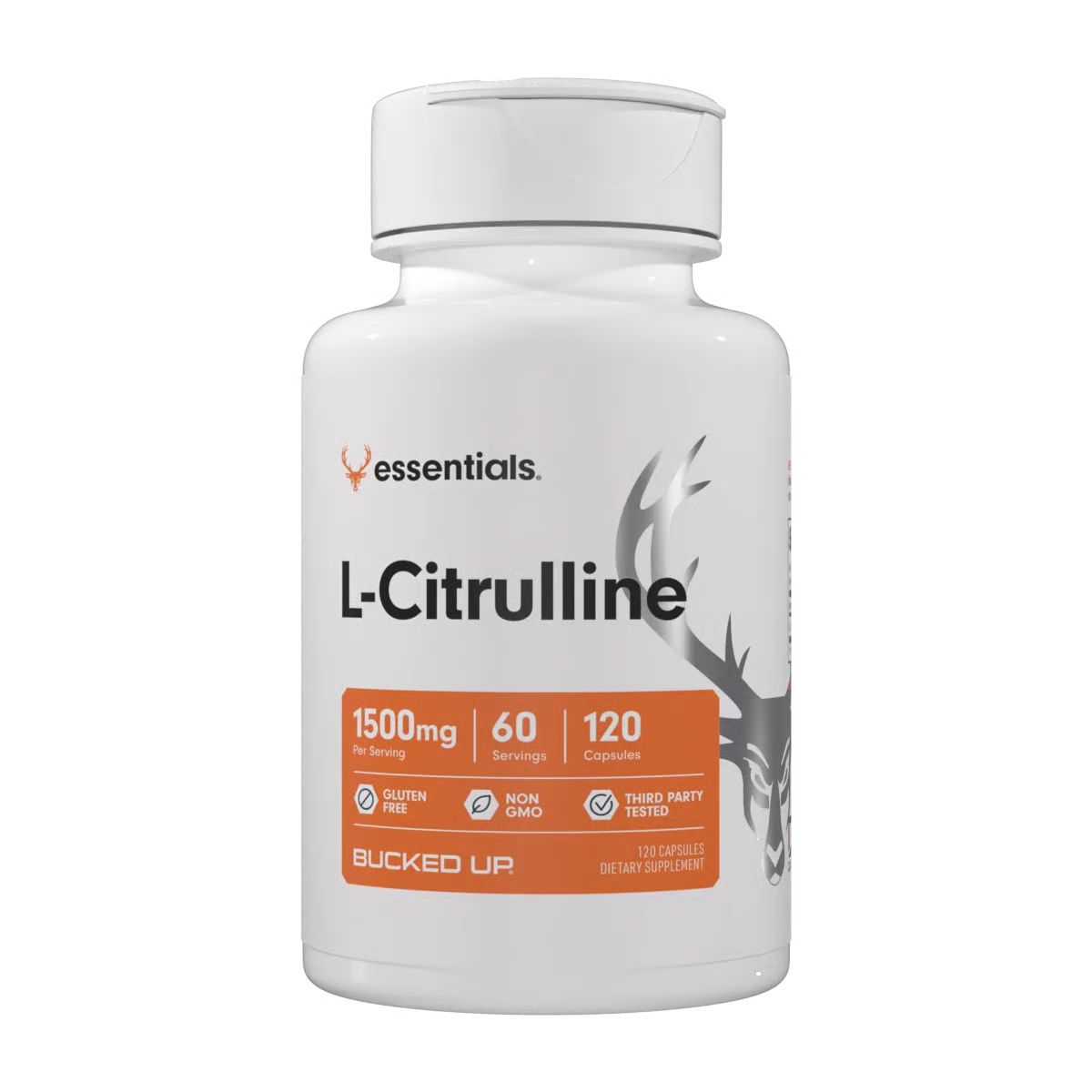
For athletes who want to dial in their citrulline intake independently, Bucked Up offers standalone L-citrulline in both malate and pure forms so you can match your training protocol.
All Bucked Up products are manufactured in GMP-certified facilities in the United States.
*These statements have not been evaluated by the Food and Drug Administration. This product is not intended to diagnose, treat, cure, or prevent any disease.
Frequently Asked Questions
Can you take L-citrulline and L-arginine together safely?
For most healthy adults, taking L-citrulline and L-arginine together is generally well-tolerated at performance-relevant doses. The combination is not considered inherently unsafe, but people with low blood pressure, kidney conditions, or those taking blood pressure medications, nitrate medications, or phosphodiesterase-5 inhibitors should consult a healthcare provider before combining these amino acids. At very high arginine doses, well above typical supplement servings, gastrointestinal side effects become more likely. Sticking to studied performance doses and talking with a healthcare provider if you have underlying conditions is a practical approach.
Does L-citrulline work better than L-arginine for supporting nitric oxide production?
L-citrulline bypasses the first-pass metabolism discussed earlier, which limits oral L-arginine’s systemic availability. It is absorbed intact, converted to L-arginine in the kidneys, and produces a more sustained elevation in plasma arginine levels. For supporting nitric oxide production over the course of a training session, this pharmacokinetic profile often makes L-citrulline the more reliable single ingredient for many healthy, active adults.
What is the difference between citrulline malate and pure L-citrulline?
Citrulline malate is a compound of L-citrulline and malic acid, typically in a 2:1 ratio by weight. Because the malate portion makes up roughly 44% of the compound’s weight, an 8 g dose of citrulline malate delivers approximately 4.5 g of actual L-citrulline. Pure L-citrulline delivers 100% L-citrulline by weight, so dose-for-dose comparisons matter when you evaluate labels. The malate component is theorized to support aerobic energy production via the Krebs cycle, which is why citrulline malate often appears in endurance and resistance exercise formulas. Pure L-citrulline is often chosen when the goal is maximizing the nitric oxide support pathway or when stacking with other pump ingredients.
How long does it take for L-citrulline to work?
As noted in the timing guidance above, peak plasma L-citrulline concentrations occur within 0.7 to 2 hours. This pattern explains why the 60-minute pre-workout window is standard. For acute pre-workout use, that window allows plasma arginine levels to rise before the session begins. For sustained performance support, multi-day supplementation at 6 g per day of pure L-citrulline appears to produce more consistent outcomes than relying on a single pre-exercise dose, based on available human trial data.
Do I need to take L-citrulline every day or only before workouts?
Both patterns have been studied. Single pre-exercise doses have shown inconsistent results across controlled trials, while multi-day supplementation at 6 g per day of pure L-citrulline for seven or more days has shown more consistent support for exercise performance outcomes. Daily use builds a sustained elevation in plasma arginine levels rather than relying on a single acute spike. For athletes who train regularly, daily supplementation currently has stronger support in the research. Taking it pre-workout on training days and at a consistent time on rest days covers both the acute timing window and the multi-day loading benefit.
Conclusion
L-citrulline and L-arginine both feed the nitric oxide production pathway, but they reach that pathway through different routes. L-arginine acts as the direct substrate, yet first-pass metabolism limits how much of an oral dose reaches systemic circulation. L-citrulline bypasses that bottleneck, converts to L-arginine in the kidneys, and supports a more sustained elevation in plasma arginine. For many healthy, active adults, a properly dosed L-citrulline supplement can cover nitric oxide support without requiring a combination approach.
When you evaluate a pre-workout for citrulline content, focus on a few clear criteria. Check whether the dose is disclosed on the label. Confirm that it sits at or above thresholds studied in human performance trials. Look for an absorption support ingredient. Make sure the form, either pure L-citrulline or citrulline malate 2:1, matches your training goal.
Bucked Up discloses every gram of citrulline across its pre-workout line and includes Astragin® in every formula to support absorption.* See the full transparent-label lineup.
*These statements have not been evaluated by the Food and Drug Administration. This product is not intended to diagnose, treat, cure, or prevent any disease.
References
Bailey, S. J., et al. (2015). L-citrulline supplementation improves O2 uptake kinetics and high-intensity exercise performance in humans. Journal of Applied Physiology, 119(4), 385–395.
Schwedhelm, E., et al. (2008). Pharmacokinetic and pharmacodynamic properties of oral L-citrulline and L-arginine: impact on nitric oxide metabolism. British Journal of Clinical Pharmacology, 65(1), 51–59.
Evans, R. W., et al. (2004). L-arginine supplementation and the regulation of protein metabolism in men with a hypercholesterolemic diet. Journal of Nutritional Biochemistry, 15(9), 534–539.
1 The content provided in this article is for informational purposes only and is not medical advice. Consult with a medical professional before implementing any changes to your diet, health, or exercise routines.
Individual results will vary and are based on a combination of each individual’s diet, exercise, age, and health circumstances.
These statements have not been evaluated by the Food and Drug Administration. This product is not intended to diagnose, treat, cure or prevent any disease.
This article was written by Ryan Gardner, CEO of Bucked Up. As the maker of Bucked Up Protein Soda, we have a financial interest in this information. The views expressed are our own and should be read with that context in mind.